A collaborative conference brought to you by:

Agenda
Apr 26
2026
9AM-2:30PM PDT
2026
9AM-2:30PM PDT
 Panelist: Christopher Jain Miller
9:05 am - 9:45 am
“Anekāntavāda in the Age of Information: When Truth Is Abundant but Judgment and Action Are Not”
40 mins
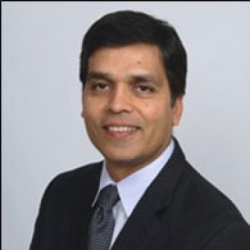 Panelist: Yogendra Jain
In the modern world, truth is no longer scarce—it is overwhelming. Facts, data, expert opinions, and algorithmically curated narratives surround us, yet disagreement, polarization, and poor decisions persist. The problem is not simply what is true, but how truth is filtered, interpreted, weighted, and acted upon when certainty is incomplete and incentives are misaligned. This talk begins with Anekāntavāda, not as a doctrine of tolerance, but as an early recognition that reality is encountered through partial and conditioned perspectives. It then moves beyond traditional formulations to address a modern gap: understanding the genesis of viewpoints themselves. Perspectives are shaped not only by knowledge, but by education, culture, emotional and mental state, stress, trauma, identity, and increasingly by algorithmic systems that influence what we see and how we think. Using contemporary examples—from social media narratives and conspiracy thinking to AI-mediated decision systems—the lecture argues that merely considering multiple viewpoints is no longer sufficient. What is needed are new ways to distinguish insight from distortion, to assign proportional weight to perspectives, and to move from abundant facts toward sound judgment and responsible action. Rather than reinterpreting Anekāntavāda, the talk extends it—proposing a decision- oriented framework for navigating a world where facts are plentiful, but truth, judgment, and action remain contested.
Young Jains of America (YJA) Panel: “Anekāntavāda and Interreligious Dialogue in Everyday Life”
Presiding:  Alan Brill
Alan Brill10:00 am - 10:15 am
“Deconstructing Anekantavada as a front for injustice”
15 mins
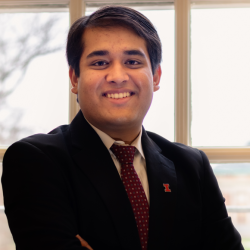 Panelist: Ankith Desai
This presentation will critically examine Anekantavada as invoked in the face of injustices. While often celebrated for promoting tolerance, it can also be used to bypass accountability, allowing harms to even be welcomed. By analyzing cases where appeals to Anekantavada overshadow the explicit wrongs experienced, learn how important it is to understand "engaged Anekantavada" as a concept of political thought. This paper will explore how Anekantavada can be applied without diluting the pursuit of justice, offering a critical lens on the limits and responsibilities of Jain pluralistic thought.
10:15 am - 10:30 am
“Are Some Lives Valued More than Others? — Applying a Jain Lens to Animal Welfare Law”
15 mins
 Panelist: Riya Parekh
In the United States, animals are classified as property rather than rights-bearing living beings which raises important moral and legal concerns. This definition enables the ill-treatment of animals by viewing them as objects, which is also harmful to humans through broader social, environmental, and ethical implications. In this talk, the legal status and rights of animals as prescribed in existing animal welfare laws in the U.S. and internationally will be explored. Applying the Jain principles of ahimsa (non-violence) and jiv daya (compassion for all living beings), this presentation will critically examine the legal approach to animal welfare and will provide us with the tools to make a case for recognizing animals as beings with dignity, agency, and moral worth.
10:30 am - 10:45 am
“An Interfaith Tapestry: Hinduism, Buddhism, and Jainism”
15 mins
 Panelist: Rihi Jain
In an increasingly interconnected yet polarized world, religious misunderstanding continues to fuel stereotyping and exclusion. Jainism, often misrepresented or absorbed under broader South Asian religious categories, offers a compelling ethical framework for interfaith engagement that is both rigorous and inclusive. Drawing on insights from an interview with Dr. Justin Henry, an assistant professor in the Department of Religious Studies at the University of South Florida, this talk examines Jainism’s core principles—Ahimsa (nonviolence), Anekantavada (multiplicity of viewpoints), and Aparigraha (non-possessiveness)—as powerful catalysts for interfaith dialogue. By situating Jainism alongside Hinduism and Buddhism within the broader tapestry of South Asian religious traditions, the presentation clarifies both shared ethical commitments and key theological distinctions, particularly in conversations surrounding karma, liberation, and the nature of the self. Jainism is underrepresented in contemporary interfaith spaces and the “ambassador potential” of Jain communities within the global diaspora remains untapped. Through comparative analysis and practical reflection, Jain ethics provide a blueprint for interfaith citizenship; one that prioritizes empathy over ego, dialogue over dogma, and coexistence over uniformity. Ultimately, this presentation invites audiences to reconsider interfaith engagement not as a compromise of belief, but as an ethical imperative rooted in shared humanity.
10:45 am - 11:00 am
“Beyond Pacifism: How Jain Principles Call Us to Serve”
15 mins
 Panelist: Ishya Jain
Jesuit social justice values invoke curiosity about how different religious traditions understand service and ethical responsibility. In the case of Jainism, this leads to the central question of how a tradition, often described as pacifist or introspective, calls its followers to justice and engagement in the world. While existing scholarship frequently contrasts Jain restraint with action-oriented traditions, this framing overlooks the ethical demands embedded within Jain philosophy. Jainism encourages engagement with justice through several core frameworks. Samyak charitra (right conduct) positions ethical action as essential to liberation, emphasizing that moral discipline includes responsibility for one’s effects on others. Atheistic interdependence further reinforces this responsibility because without divine intervention, humans are fully accountable for addressing suffering, creating an ethical obligation to reduce harm without adopting a savior mindset. The nimitta (apparent cause) and upadaan (real cause) framework explains action as the result of both external conditions and internal intention, framing service as an instrumental cause that creates external benefits while simultaneously cultivating humility and spiritual growth in the actor. Placing these ideas in conversation with Jesuit values highlights shared commitments to service and justice across traditions, though differences in how action, suffering, and moral responsibility are understood are evident.
Young Jain Professionals (YJP) Roundtable: “Beyond Right and Wrong: Applying Anekāntavāda in Modern Workplaces”
Presiding: 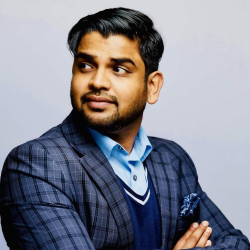 Arpit Mehta
Arpit Mehta11:30 am - 1:00 pm
Roundtable Discussion
90 mins
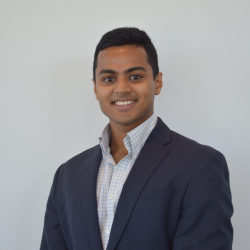 Panelist: Mannan Mehta
 Panelist: Sheenika Shah Gandhi
 Panelist: Priyanka Choradia
 Panelist: Amit Lodha
Modern workplaces are increasingly diverse, fast-moving, and complex, yet decisions are often approached through rigid “right vs. wrong” thinking. This roundtable explores Anekantvada—the philosophy of multiple perspectives—as a practical mindset for fostering empathy, collaboration, and balanced leadership at work. Our panel speakers will discuss how acknowledging differing viewpoints can reduce conflict, strengthen teams, and enable more thoughtful decision making in professional environments.
 Jonathan Dickstein
1:00 pm - 1:15 pm
“Jain Perspectives on Money and Wealth”
15 mins
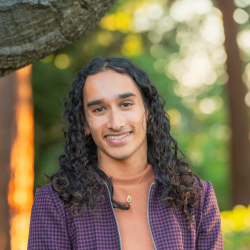 Panelist: Moh Mookim
The concept of anekāntavāda is often translated to ‘multiple truths.’ This talk will explore what we can uncover about wealth and money if we consider peoples’ multiple realities. It is often noted that Jains are the wealthiest community or religious group in India. What are the different realities people experience in the process of one group of people maintaining wealth privilege over generations? Those with wealth will have one experience; those without it—who often supply their labor in the production of others’ wealth—will have another. Drawing on the concept of ahimsa, what would a nonviolent approach to money and wealth look like? This talk will share the experiences of a Jain person with wealth privilege developing close relationships with poor people organizing for a fair distribution of wealth, land, and power. The talk will culminate in presenting a Jain case for wealth redistribution.
1:15 pm - 1:30 pm
“Anekāntavāda and Repair in Societies”
15 mins
 Panelist: Sahana Mehta
Anekantavada and Repair in Societies explores the need for a more comprehensive understanding of truth in order to repair social harms. Anekantavada—the Jain principle that reality is complex and can only be understood by holding many perspectives—offers a powerful lens for confronting social harm in the United States, where dominant narratives have long narrowed what is seen and remembered. In America, slavery is often framed as a completed chapter of the past, disconnected from present-day conditions. This single, dominant perspective makes repair feel unnecessary or symbolic, rather than material and urgent. Drawing on her work advancing reparations for the ongoing harms of slavery and a broader culture of repair, Sahana will reflect on what it takes to move societies toward repair. This talk understands Anekantavada as an engaged moral practice: a commitment to seeing suppressed truths, naming power, and navigating complexity without retreating from accountability. By expanding our view of truth, Anekantavada creates the conditions for collective repair.
1:30 pm - 1:45 pm
"Anekantvad & Democracy Beyond the Ballot Box"
15 mins
 Panelist: Anjli Shah
What if anekantvad—the understanding that truth emerges through multiplicity of perspectives—offers a vision for democracy beyond electoral politics? This presentation will discuss examples where Jain principles can be seen in community models that embed deep democratic practices within economic institutions. These models ensure communities have power to shape their economies as producers, consumers, and decision-makers. Drawing on concepts of economic democracy, we'll explore how democratic governance structures can make compassionate action the easier, default choice instead of requiring individuals to live Jain values within systems designed to reward harm.
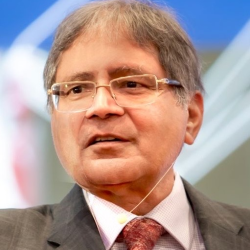 Parveen Jain