A collaborative conference brought to you by:
Agenda
Apr 25
2026
9AM-1PM PDT
2026
9AM-1PM PDT
 Panelist: Parveen Jain
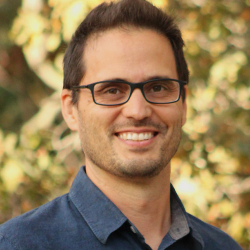 Christopher Jain Miller
9:05 am - 9:45 am
“Anekāntavāda, Jainism and the Future of Comparative Theology”
40 mins
 Panelist: Melanie Barbato
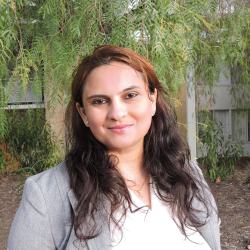 Panelist: Venu Mehta
Anekāntavāda can provide Jains with a framework for engaging with different perspectives, including other philosophical and religious traditions. In this keynote lecture, two of the editors of the forthcoming volume “Jainism and Comparative Theology: A Multi-Religious Approach” will share their vision for academic interreligious reflection involving Jainism. Melanie Barbato will present on comparative theology as a method for bringing texts, people and aesthetics into fruitful conversation. While comparative theology has developed predominantly in Christian theology, her own approach has been deeply affected by her engagement with Jain communities and Jain thought, especially anekāntavāda. The forthcoming book makes the case for comparative theology as a method that can be done from any tradition, and that resonates particularly with a Jain multiperspectival approach. Venu Mehta will talk about what comparative theology can mean in the context of Jainism and Jain Studies. She frames comparison as a disciplined practice of attentiveness, humility, and ethical responsibility rather than a search for synthesis or equivalence. Drawing on her experience of using comparative theology to think across Jain and Hindu goddess traditions, Mehta shows how sustained engagement with multiple devotional and theological worlds can deepen Jain self-understanding while also raising critical questions about normativity, voice, and power in interreligious scholarship.
10:00 am - 10:20 am
“Beyond Philosophy: The Experiential Bases of Anekāntavāda and Dharmasamanvaya”
20 mins
 Panelist: Jeffery D. Long
This paper is part of a larger comparative theological project that brings Jain and Hindu thought into dialogue with one another: specifically, the Jain teaching of the complexity of existence (or anekāntavāda) and the doctrine of the harmony of religions (dharmasamanvaya) promulgated by the Vedānta tradition of Sri Ramakrishna and Swami Vivekananda. This paper will examine ways that both doctrines point beyond themselves to their respective experiential bases. Anekāntavāda, it will be argued, is rooted in metaphysical realism: that is, in an understanding that the reality that presents itself to our experience has certain objective features that are available to our knowledge. This doctrine’s claim that reality itself is complex is derived from the lived experience of this very complexity: the fact that reality presents itself to us as having multiple aspects. Dharmasamanvaya, on the other hand, is rooted in the very specific experience of the sādhanas of Sri Ramakrishna, and his conclusion, based on these experiences, that many paths can lead to the highest realization. This conclusion on the part of Sri Ramakrishna exhibits the same metaphysical realism as does the anekāntavāda, being rooted in experience.
10:20 am - 10:40 am
“Jain Engagements with Hindus and Others through Study: Haribhadrasūri and the Compendium of Current Teachings”
20 mins
 Panelist: Anil Mundra
Few premodern South Asian thinkers were as intensively engaged with others' views as was the late-first millennium Śvetāmbara intellectual Haribharasūri. He is best known for his compendia -- including the first known articulation of the "six schools of thought" (ṣaḍ-darśana) -- and for his seminal theorization of non-one-sidedness (anekāntavāda). These two segments of his work converge in his Compendium of Current Teachings (Śāstravārttāsamuccaya), which pursues the classical non-one-sided program of both criticizing and qualifiedly affirming one-sided views through a "both-and" rather than an "either-or" approach to competing views. Haribhadra's method is to constructively engage opposing views of various schools of Hindus and others rather than avoiding the conflicts that they present.
11:00 am - 11:20 am
“Being and Becoming in Environmental Ethics: A Jain and Buddhist Complementary Approach”
20 mins
 Panelist: Brian Philip Dunn
The accelerating climate crisis across multiple global contexts demands ethical frameworks robust enough to engage complexity across cultures, regions, and epistemic traditions. Religious worldviews, long marginalized or scapegoated in environmental discourse, offer eco-relational, place-based moral resources for addressing these challenges. Framed by the Jain doctrine of anekāntavāda (non-absolutism or the plurality of viewpoints), this paper considers the possibility of a complementary rather than competitive approach to environmental ethics. Rather than privileging a single normative lens, anekāntavāda provides a disciplined method for holding partial, context-bound truths in productive tension. This is illustrated through two classical cosmological diagrams: the integrative pedagogical forms of the Jain Lokapuruṣa and the Buddhist Bhavacakra, along with their textually encoded teachings on reality, moral causality, and the human–cosmic relationship. The Lokapuruṣa presents a morally structured cosmos inhabited by enduring living beings (jīvas), grounding environmental responsibility in radical restraint and non-violence toward all life. The Bhavacakra, by contrast, depicts cyclic existence driven by ignorance, craving, and grasping, locating ecological harm in false constructions of the self and intentionality. Read through anekāntavāda, this paper argues that both perspectives are necessary. Jain and Buddhist ethics thus emerge as complementary ecological correctives, offering critical resources for a more inclusive and globally responsive environmental ethic.
11:20 am - 11:40 am
“From a Certain Perspective, Mind and Body are Dual: Jaina and Chinese Traditions in Dialogue"
20 mins
 Panelist: Leah Kalmanson
This presentation investigates differences between Jaina and Chinese traditions through the lens of popular contemplative practices such as yoga and qigong. By focusing on assumptions regarding the mind-body relationship underlying these practices and their liberatory aims, we open up questions regarding sentience and materiality more broadly in both metaphysical and ecological terms. Critiquing dualism seems to be a rite of passage in many areas of academia today, especially for scholars in environmental discourses who call for processual metaphysics, relational ontologies, or vitalistic materialisms. However, the Jaina tradition invites us to reconsider this trajectory, especially on the question of whether a strong distinction between living beings and non-living matter is at the root of the contemporary ecological crisis. Focusing on a dialogue with Chinese philosophies helps to complicate the orientalist framework that pits the holism of the so-called East against the dualism of the so-called West, allowing for both greater clarity and greater complexity in our discussion of mind- body duality and its ecological implications.
12:00 pm - 12:20 pm
“Strange Ghouls and the Alien Other: A Comparative Theology of Immigration”
20 mins
 Panelist: Tracy Tiemeier
The US Catholic bishops have a long history in support of the rights of migrants and immigrants. Calling for hospitality and solidarity, they have emphasized kinship and commonalities across borders. However, even as the Catholic Church has been strong on immigration reform in the United States, its message has not been effective. Instead, prominent Catholic politicians and public figures have tended to emphasize difference as a basis for exclusion and strangeness as a justification for detainment and violence. A renewed Catholic theology of immigration is therefore necessary, one that holds space for difference and emphasizes multiplicity rather than sameness. Such a theology can learn from South Indian Jain traditions surrounding the terrifying ghoul called Nīli. Nīli is a bloodthirsty demon, a fierce village goddess, a woman done wrong, a model devotee, and a low caste traveling theologian, all at the same time. A liminal figure and stranger, even within the traditions devoted to her, Nīli offers a powerful message of uncompromising strangeness for our times.
12:20 pm - 12:40 pm
“Interrelated Existence as a Point of Convergence between Islam and Jainism: Human and Nonhuman Beings in a Holistic Nexus”
20 mins
 Panelist: Elif Emirahmetoğlu
Islam allows killing animals for food and religious sacrifice, which directly opposes the prohibitions observed in Jainism. Jain life is shaped by a deep and empathetic commitment to preserving the lives of animals, even the smallest. These differing attitudes towards animals often hinder theological exchanges between the two religions. This paper proposes that the interrelated nature of existence offers a point of convergence for deeper theological learning. It examines how the Qur’anic worldview places humans and nonhuman beings in a shared spiritual and moral context, where the well-being of all lifeforms –humans, animals, plants, and inanimate beings– is interconnected. This exploration also questions the widespread belief that humans hold a privileged status over other beings in Islam. The paper then connects the Islamic view of interrelated existence to the Jain view of the interconnected jīvas, an idea that closely links humans, animals, and plants.